
Post-IPO and equity transfer, government shareholding in the company will come down to 78.43 per cent. IOC will hold 4.45 per cent equity stake in the expanded equity base while HPCL and BPCL would hold 2.23 per cent each. Public holding would be 12.66 per cent.

Reliance Industries (RIL) delivered a better-than-expected operational performance in Q1FY27, driven by a recovery in its oil-to-chemicals (O2C) business and robust gains in the telecom (Jio) segment, though its retail arm missed estimates. Analysts highlight the upcoming Jio Platforms IPO and execution in new energy and consumer businesses as key triggers for the stock's future growth.

Investors are keenly awaiting clarity on Reliance Jio Infocomm's IPO, the company's AI and data centre strategies, and next-generation leadership structure at Reliance Industries Ltd's (RIL's) 49th annual general meeting (AGM).
Oil India's IPO will open on schedule inspite of the market volatility, stated government sources.
OIL, which produces 3.5 million tonnes a year of oil, will offer 2.64 crore equity shares to public in the IPO, while the government will simultaneously sell 10 per cent of its stake in the company to state refiners.
OIL, which produces 3.5 million tonnes a year of oil, will offer 2.64 crore equity shares to public in the IPO, while the government will simultaneously sell 10 per cent of its stake in the company to state refiners.
Public sector exploration firm Oil India is likely to hit the capital market, with an initial public offering of 2.64 crore shares, in November.

Reliance Industries Ltd (RIL) has expressed caution regarding 'extreme volatility' risks stemming from the West Asian conflict, which could impact global oil demand and the company's margins, while also noting that near-term retail consumption demand may remain sensitive to macro conditions. Chairman Mukesh Ambani, in the annual report, remained silent on the timeline for Jio Platforms' anticipated public listing, stating the group will 'continue to evaluate strategic pathways'.

Reliance Industries' digital arm, Jio Platforms, may see its initial public offering (IPO) delayed to the second half of fiscal 2027, according to CreditSights. The delay is primarily attributed to ongoing geopolitical tensions in the Middle East, which could impact market conditions and investor sentiment.
OIL, which produces 3.5 million tonnes a year of oil, will offer 2.64 crore equity shares to public in the IPO, while the government will simultaneously sell 10 per cent of its stake in the company to state refiners. An 11 per cent fresh equity would be sold in the IPO while the government would divest 10 per cent of its stake at the IPO price.

'When I look at India's relative valuations, these are by far the lowest I have seen in my 35-year career.' 'The relative 12-month trailing performance is among the weakest I have seen, and foreign investor positioning is at a 16-17 year low.'
The report notes that equities had faced pressure from elevated valuation premiums, subdued nominal gross domestic product (GDP) and earnings growth, sustained foreign portfolio investor (FPI) selling, artificial intelligence (AI) infrastructure euphoria, and external shocks including US tariffs and a spike in crude oil prices due to geopolitical tensions in West Asia. However, several of these factors are now reversing.

As the rupee weakens, wealthy families are accelerating investments in global assets.
'Investors shouldn't let fear dictate their decisions. The most important step is simply to begin investing.'

Indian benchmark equity indices, Sensex and Nifty, ended lower after a five-day rally, with the Sensex dropping 607 points and the Nifty falling to 24,013.10. The decline was primarily driven by heavy selling in IT firms following Accenture's trimmed revenue guidance and renewed geopolitical uncertainty, specifically the postponement of US-Iran negotiations.
The government is planning divestments in at least 5 public sector undertakings including Maruti, Balco, Bhel, Oil India and Powergrid in the next few months as part of efforts to raise Rs 5,000-7,000 crore (Rs 50-70 billion) in 2005-06.

New demat account additions in India reached an 11-month low in March, with only 2.15 million new accounts opened, significantly below the 12-month average. This slowdown is attributed to a sharp decline in equity markets, escalating West Asia tensions, and increased crude oil prices impacting India's economic outlook.
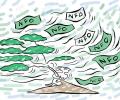
Uncertainty stemming from the US-Iran conflict has significantly impacted India's mutual fund industry, leading to a sharp decline in new fund offers (NFOs) in March, despite numerous regulatory approvals. This geopolitical tension, coupled with existing market strain and distributor hesitation, has dampened investor sentiment and affected overall inflows.

In the present hyper-connected world, there are many domestic and global factors that affect financial markets. Of them, the most powerful and often least predictable are geopolitical events, which often boil down to one diplomatic headline.
Oil India chief reveals plans of the upcoming IPO and future investment strategies.
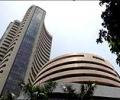
The offer will be open from September 7 to 11 and the price-band has been fixed between Rs 950 and Rs 1,050 per equity share. OIL, which produces 3.5-million tonnes of oil annually, will offer 2.64-crore equity shares to the public through the IPO.
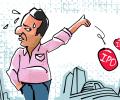
'The primary market's rhythm mirrors investor confidence. While sentiment may appear cautious, it reflects maturity, not weakness.'
The timing, however, would be decided in consultation with the government and after the approval of the company's board. An 11 per cent fresh equity would be sold in the IPO while the government would divest 10 per cent of its stake at the IPO price.

'An asset must generate income. Equities yield dividends, bonds pay coupons, deposits give interest, and real estate earns rent.' 'Gold, silver, and even Bitcoin produce no income, they merely store value. So, they should not be compared to productive assets.'
OIL, the nation's second biggest state-run oil and gas explorer, was to launch its IPO of 2.64 crore equity shares on November 10, but the reversal of fortunes on the stock markets led to its deferment by a few weeks. It now has been put back for at least a couple of months.

Reliance Jio, the telecom business of the Mukesh Ambani-promoted conglomerate, is expected to go for an initial public offering (IPO) of over $6.25 billion either in the second or the third quarter of the calendar year 2025, sources said. Reliance Retail is likely to be listed around the same time with a short gap, it is learnt. The timing of the two IPOs, however, will depend on the company's assessment of the market conditions among other factors.

Reliance Industries (RIL) annual general meeting (AGM) had several stunning announcements. RIL looks to list Jio Platforms (JPL) by June 2026. It targets doubling of FY22 earnings before interest, taxes, depreciation and amortisation (Ebitda) (Rs 1.25 trillion; $14.6 billion) by FY27 implying 14.7 per cent compound annual growth rate (CAGR) over the FY22 levels.

The decision to hike US H-1B visa application fee to $100,000, trade talks and the GST rate cut will be the key drivers for stock market movement this week, analysts said.
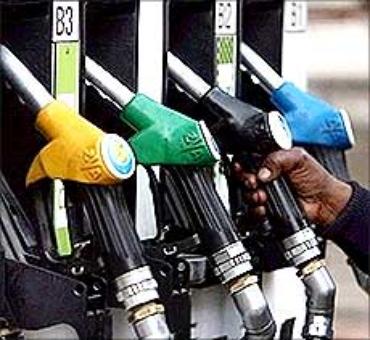
Oil India Ltd, the second state-run firm to hit the market with an offering of equity shares this year, may price its IPO that opens on September 7 at Rs 1,000-1,100 a share.
OIL is planning an IPO to raise Rs 1474 crore to assist in its expansion plans.

'Expect India to keep doing well irrespective of geopolitics.'

The oil explorer's IPO received bids for 80.93 crore (809.3 million) shares against 2.64 crore (26.4 million) on offer as on 1600 hrs. Investment banking sources said that the portion reserved for qualified institutional buyers got subscribed 54 times, while the non-institutional and retail investors bid 9.77 times and 1.14 times respectively.

The upstream oil and gas (O&G) sector has delivered a stellar performance in the stock market in the recent past. The O&G sector is dominated by PSUs and despite the imposition of a windfall tax, profitability has been impressive. Oil India Limited (OIL) is particularly favoured by investors.

Diwali fireworks are expected to continue on Dalal Street next week, with four companies collectively seeking to mobilise over Rs 6,600 crore through initial public offerings (IPOs). In terms of the amount raised, this is poised to be the busiest week of calendar year 2023. Tata Technologies (Tata Tech), a subsidiary of Tata Motors, could lead the charge with an IPO projected to be over Rs 2,900 crore. This will mark the first maiden share sale by a Tata Group firm in nearly two decades.

The government on Monday fixed the issue price of the initial public offer of state-run explorer Oil India at Rs 1,050 per share, raising a cumulative Rs 4,982 crore.
IndiaBulls Power IPO's charged-up performance (the issue was subscribed 21.84 times) earlier this month had only one jarring note: the retail portion of the initial public offer barely scraped through, with a subscription of 1.09 times.
Atherstone Capital Markets has come up with India IPO Index, which is an index of companies listed on the stock exchanges.
Divestment in major state-run firms is set to perk up the IPO space, with about six PSUs including Air India, BSNL, Oil India and NHPC, gearing up to sell equity sale in the primary market.

Quarterly earnings of corporates, trading activity of foreign investors and inflation data are the key factors that are expected to drive the momentum in the equity markets this week, analysts said.
